My Brain Lied To Me: How I Stopped Ruminating With Facts
A personal breakdown of how rumination took over, how facts shut it down, and how thought logging helped separate fear from reality in an ADHD brain.
AWARENESSSELF-COMPASSIONRESILIENCE & ACCEPTANCE
JJ Everitt
1/18/20264 min read
My Brain Lied To Me: How I Stopped Ruminating With Facts
Lately, I've been feeling conflicted about quitting my job and leaving the income responsibility solely on my wife. I had fears about going hungry, shutting the power off, or even losing the house entirely. I had negative thoughts about feeling like a disappointment or a loser because I felt vulnerable. I didn’t like it, and I was having these ruminations daily.
Here’s the thing: there is zero evidence to support these feelings.
Everything is fine. She makes twice as much as I did when I was working. Our bills are getting paid, we’re able to eat, and she hasn’t brought any of these concerns to me once. I was making all of this up in my head.
The brain is funny. Usually, it helps me out. Usually, we have a good relationship and understand each other. Sometimes we don’t. Sometimes my brain is a liar.
I know I might sound crazy talking about the brain like it’s another person, but sometimes the "left brain" fights with the "right brain", making two opposing thoughts appear to be correct at the same time.
The brain has two general styles of processing. One is more logical and analytical: the "left brain". The other is more intuitive and creative: the "right brain". Most people switch between both easily. In ADHD, the brain often leans more on the intuitive side and has a harder time using the logical side consistently, especially for planning and reasoning tasks.
ADHD brains also move dopamine out of circulation faster than usual. Dopamine helps with motivation, focus, and reward. Because baseline dopamine is lower, the brain seeks stimulation and novelty to compensate. When healthy sources of stimulation are missing, the brain may create its own by cycling through fear, worry, or anxiety. This temporarily boosts dopamine but keeps the nervous system stuck in stress.
Mindfulness practices can help ease the intensity of this cycle.
I started a thought log to argue with my brain externally and help me sort out fact from fiction.
Here are the six things I do when the dark cloud of rumination starts circling in my head.
Identify the situation
I asked myself: What actually happened? Not what I feel like is happening. What are the facts of this situation? In this case, the situation is new. Since I was 16 years old, I never gone without a job, and I’ve always contributed and shared responsibility. Naturally, this situation feels scary to me and makes me feel vulnerable, and I don’t like it.
Identify the emotions
As I said, I feel vulnerable. I also felt like a disappointment, and I felt insecure. I am insecure about not having control over the situation. I know these feelings are a blend of deep-rooted emotions that likely stem from parts of my childhood. They also bled into my younger adult life when I was an unstable, very young parent with little life experience, worried about keeping my kids fed, happy, and healthy. Even though we are all older and I have more life experience now, I still worry.
Identify the automatic thoughts
This is where you start catching on that your right brain is lying to you, because rational thoughts go right out the window. Logical sense disappears, and you’re left with thoughts that feel real on the surface but are absolutely ridiculous once you break them down.
For instance, I started imagining scenarios where we lose the house or have the power shut off. I worried that our kids were going to starve. My favorite one was the thought that "I won’t be able to find a decent job again".
Find the evidence for and against
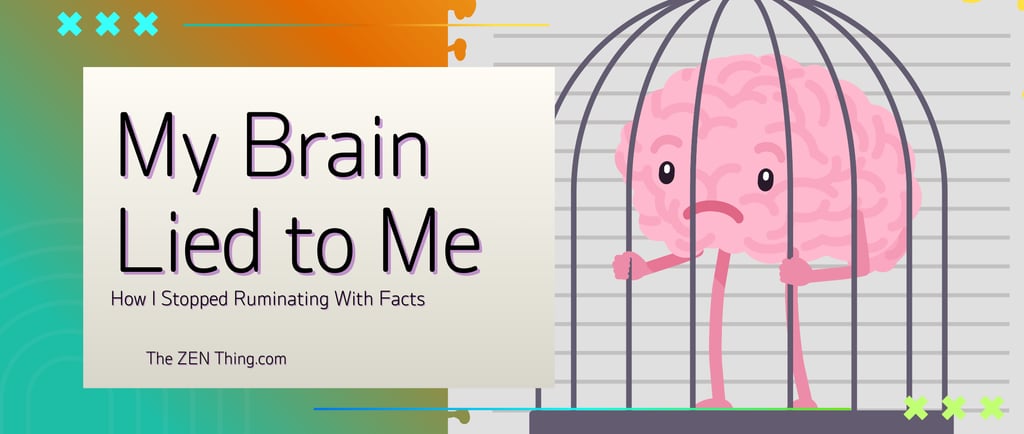
All of these negative thoughts were racing around in my head uncontrollably, without any evidence for or against them. I identified the feelings, acknowledged that this was a fear-based argument, sorted the facts, and started building a case like I was a prosecutor trying to put my "right brain" in jail for disrupting my peace.
I acknowledge that these scenarios could happen and have happened to people before. But the facts are clear: we haven’t missed any payments. We’ve never even been late. There is zero evidence to support the idea that the power will be shut off or that we will lose the house. There are also resources, such as food banks for food insecurity and employment agencies, if things become difficult. My wife doesn't resent me, and my kids don't worry about food because I cook dinner almost every night. Case closed.
Alternative thought
Now that I’ve identified that these feelings stem from multiple sources and that they are only emotions with zero factual support, what happens next? I feel relieved. My "right brain" is back where it belongs, in jail, where it can’t terrorize me anymore. I feel a sense of peace knowing I’ve regained control over my thoughts and emotions because I understand what’s happening. I also feel a little silly for letting these thoughts spiral as far as they did.
Outcome: New emotions and behaviors
Rumination is like walking backward on an escalator. You lose your sense of direction, and you’re not actually going anywhere. When you take the time to get your thoughts out of your head and organize them in a way that makes sense, it grounds you and gives you direction. It stops the spiral and allows you to look at objective truths without continuing to sabotage yourself.
When you practice this consistently, it becomes another tool in your toolbelt. Over time, you start recognizing rumination for what it is: just thoughts. So when your "right brain" starts rattling the cage again, get those thoughts out of your head quickly and remember that you’re the one holding the key to that cell.


This site is not intended to provide and does not constitute medical, legal, or other professional advice. The content on The Zen Thing is designed to support, not replace, medical, psychological, or psychiatric treatment. If you believe you may have a medical or mental health condition, please seek care from a qualified professional.
This space was created through experimentation, failure, and rebuilding. Everything shared here comes from lived experience, not theory. The focus is on what makes daily life easier to manage.